
Water Heater Installation in Boise, ID
Boise Water Heater Experts provides Water Heater Installation in Boise, ID for homeowners, landlords and business owners across Boise, Idaho and the wider Treasure Valley. Whether you're putting a water heater into a new build, moving one to a better location, or installing a different type than you had before, the installation details decide how well the system performs for the next decade. Here's what goes into a proper install in the Boise area.
Get Your Free Water Heater Quote
Tell us about your water heater needs and we will send you a quote with no obligation.
New Installations vs. Replacement Installations
A replacement installation reuses the existing water, fuel and vent connections wherever they still meet code. It is the fastest kind of install and the most common one in established neighborhoods.
A new installation — an addition, a finished living space bathroom, a garage shop sink, or a second heater for a far-away bathroom — has to run new supply lines, a new drain path for the relief valve, and a new vent or circuit. There is more planning involved and more of the cost is labor rather than equipment.
If you're simply replacing what's already there, start with water heater replacement, which covers the decision side of the job in more depth.
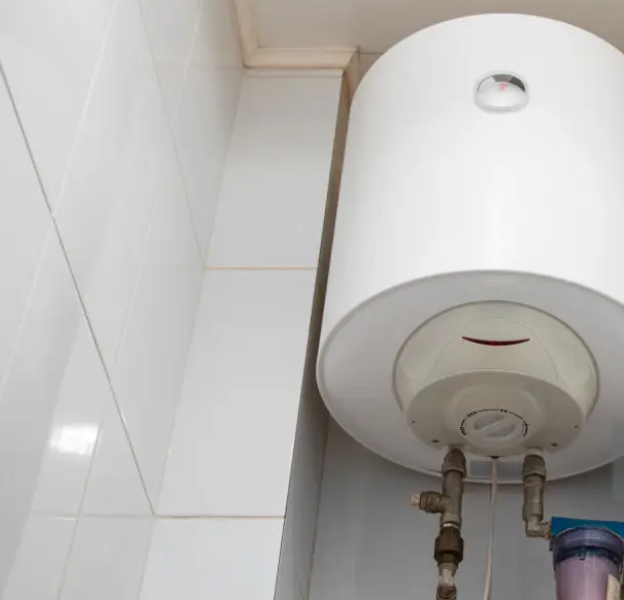
Tank, Tankless, Gas and Electric Installations
Tank system installs
The simplest installs. The unit sets on the floor or a platform, connects to cold and hot lines with flex connectors or hard pipe, and vents through the existing flue on gas models. A drain pan with a piped drain is a smart addition anywhere a leak could damage finished space.
Tankless system installs
Wall-mounted, and far more sensitive to installation quality. Condensing units need stainless or PVC venting depending on model, a condensate drain with neutralizer, isolation valves for future descaling, and adequate gas volume. Getting the vent termination and clearances right matters as much as the unit itself. See tankless water heaters.
Gas system installs
Atmospheric-vent units rely on natural draft through the chimney or flue; power-vent units use a blower and PVC through a sidewall, which opens up placement options in garages and utility areas where the existing flue is unavailable or unsuitable. Gas installs need a sediment trap, a proper shutoff, and a leak test on every joint. See gas water heaters.
Electric system installs
No combustion air, no flue — but a dedicated circuit sized to the unit and, for heat pump models, enough surrounding air volume and a condensate drain. Heat pump water heaters do best in a garage or utility area with several hundred cubic feet of space around them. See electric water heaters.
Proper Sizing Before Installation
Sizing is where installations quietly succeed or fail. Two houses on the same street can need different equipment.
| System | What gets sized | What throws it off |
|---|---|---|
| Storage tank | Gallon capacity and first-hour rating | Simultaneous showers, large soaking tubs, laundry timing |
| Tankless | Gallons per minute at your required temperature rise | Incoming-water temperature and simultaneous fixture demand |
| Heat pump electric | Capacity plus surrounding air volume | Small closets, cold unconditioned spaces |
A good installer asks about your morning routine, the number of bathrooms, and whether anyone has ever run out of hot water. Those answers drive sizing more than square footage does.
Installation, Safety and Code Considerations
The parts of an install that homeowners rarely see are the ones that keep the system safe:
- Temperature and pressure relief valve with a correctly routed discharge pipe — never capped, never reduced in size.
- Thermal expansion control where a check valve or pressure reducing valve creates a closed system; that's what an expansion tank is for.
- Correct venting and adequate combustion air on fuel-burning units.
- Dielectric protection where dissimilar metals meet, to slow corrosion at the fittings.
- Drain pan and shutoff access so future service and leaks are manageable.
- Permit and inspection where the local jurisdiction requires one.
These are also the details a home inspector flags during a sale, which is a good reason not to cut corners on an install.
Rough-In Dimensions and Clearances That Decide the Install
Most failed installation plans fail on geometry, not on equipment. Before a unit is ordered, the space is measured against the manufacturer's listed clearances and the connection heights on the new heater.
| Detail | Typical figure | Why it matters |
|---|---|---|
| Height, 40–50 gal atmospheric tank | 58–62 in plus 12–18 in of draft-hood and vent rise | Low garage ceilings and stairwell closets often rule out a taller high-efficiency tank |
| Diameter, 40–50 gal tank | 20–24 in | Older alcoves built for a 1990s tank are frequently too narrow for a modern insulated shell |
| Wall-hung tankless footprint | roughly 28 x 18 x 12 in | Frees floor area but needs stud backing and service clearance in front |
| Heat-pump water heater air volume | about 700–1,000 cu ft, or ducted | A sealed interior closet starves the evaporator; an open Boise garage bay usually works |
| T&P discharge pipe | Full size, downward pitch, terminating 6 in above the floor or outdoors | Must not be reduced, valved or threaded at the end |
| Combustion air, confined space | Two openings sized to the appliance input rating | Air-sealed newer homes rarely supply enough infiltration on their own |
Seismic and platform requirements also enter the picture: garage installations of gas-fired units in many jurisdictions require the ignition source raised 18 inches above the floor unless the appliance is listed as flammable-vapour-ignition resistant.
Sequence of a Compliant Installation Day
- Isolate the unit: close the cold inlet, shut the gas cock or breaker, and drain the tank to a safe exterior point.
- Cut out the old heater, cap or preserve the existing dielectric unions and inspect the flue or circuit for corrosion and undersizing.
- Set the new appliance level on a drain pan piped to an approved receptor, on a platform where the code requires one.
- Reconnect water with dielectric fittings, a serviceable cold-side shutoff, unions and a thermal-expansion tank charged to the incoming static pressure.
- Reconnect fuel: sediment trap and drip leg on gas, correctly sized conductors and a dedicated breaker on electric, condensate drain on condensing and heat-pump models.
- Install the T&P valve and a full-size discharge line, then fill, purge air at a fixture and check every joint under working pressure.
- Light off and verify: manifold pressure or element draw, draft at the hood with the appliance hot, flue spillage test, and outlet temperature at the nearest fixture.
- Register warranty, label the shutoffs, and set the flush and anode inspection interval for local water hardness.
Water Heater Installation Questions Boise Property Owners Ask
How long does water heater installation take?
A standard tank installation usually takes two to four hours. Tankless installations and installs in a new location typically take six hours to a full day because venting, gas or electrical work is part of the job.
Can a water heater be installed in a different spot than the old one?
Often yes. Moving the unit means extending water lines, providing a relief valve drain path, and rerouting venting or a circuit — all doable, but it changes the scope and the quote.
Do I need an expansion tank?
If your home has a pressure reducing valve or backflow preventer on the service line, the plumbing is a closed system and thermal expansion needs somewhere to go. Many installs in the Boise area include an expansion tank for that reason.
What temperature should a newly installed water heater be set to?
120°F is the usual starting point — hot enough for household use and gentler on scalding risk and energy use. Households with specific health considerations sometimes set higher and add mixing valves.
Is a permit required for installation?
Requirements vary by municipality across the Boise area. Ask your installer to confirm local rules and to handle the permit and inspection if one is needed.
Can I install a water heater myself?
Gas, venting and electrical work carry real safety and code consequences, and DIY installation can affect the manufacturer's warranty. Most homeowners are better served having a licensed professional handle it.
Do I need a thermal expansion tank in Boise?
If the house has a pressure-reducing valve, a backflow preventer or a check valve at the meter, the system is closed and the code requires expansion control. Without it, every heating cycle drives pressure up and lifts the T&P valve.
What static water pressure should the house be at?
Most fixtures and appliances are rated for a maximum of 80 psi. Higher readings call for a pressure-reducing valve; that is a common find on Boise Bench and foothill addresses where supply pressure runs high.
Can a heater be installed in a bedroom or bathroom closet?
Only a sealed-combustion, direct-vent or electric appliance is generally acceptable there. Standard atmospheric gas heaters draw combustion air from the room and are not permitted in those spaces.
Request Water Heater Installation in Boise, ID
Send a few details about your property and your current water heater. We will send you a quote with no obligation.
Not sure which service you need? Choose Not Sure in the form and describe what's happening, most homeowners are diagnosing the problem for the first time.
Get Your Free Water Heater Quote
Tell us about your water heater needs and we will send you a quote with no obligation.