Commercial Water Heater Installation in Boise, ID
Boise Water Heater Experts provides Commercial Water Heater Installation in Boise, ID for homeowners, landlords and business owners across Boise, Idaho and the wider Treasure Valley. A commercial hot-water system has to meet peak demand without interrupting customers, tenants, staff or daily operations. Installation begins with a site-specific load review, then matches capacity, recovery, utilities and redundancy to the property.
Get Your Free Water Heater Quote
Tell us about your water heater needs and we will send you a quote with no obligation.
Commercial Hot-Water Planning Starts With Demand
Restaurants, salons, gyms, multifamily buildings, offices and hospitality properties use hot water differently. Fixture count alone is not enough: an installer should document peak-use periods, required delivery temperatures, storage needs, recovery time and whether the operation can tolerate one unit being offline.
For Boise businesses, the plan should also account for mechanical-room access, freeze exposure where equipment or vent terminals sit near outside air, existing gas and electrical capacity, drainage, and the distance between the heater and fixtures.
| Property need | Installation priority |
|---|---|
| High simultaneous demand | Recovery rate, storage capacity and correctly sized distribution piping |
| Hot water is operationally critical | Staged or redundant equipment so one failure does not stop service |
| Long pipe runs | Recirculation design, balancing and insulation |
| Limited mechanical space | Service clearances, vent routing and modular equipment |
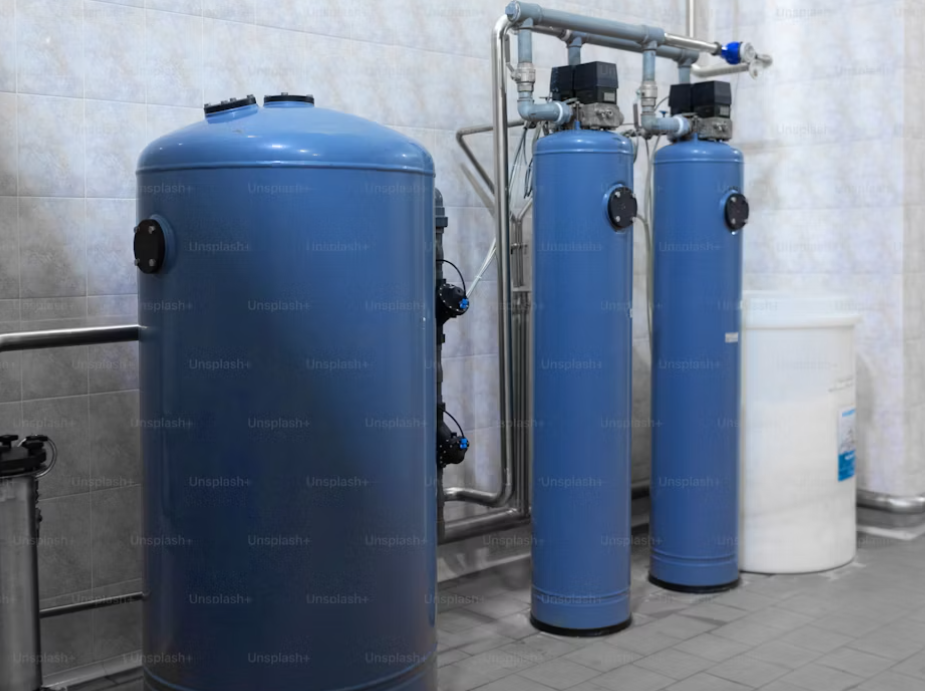
Commercial Tank, Tankless and Multi-Unit Systems
Commercial storage water heaters
Storage systems provide a reserve for sharp demand peaks. Selection depends on usable storage, burner or element input, recovery rate and the required outlet temperature—not tank volume alone. See tank water heater options.
Commercial tankless systems
Multiple tankless units can stage as demand changes and provide redundancy when designed with isolation valves and controls. Gas supply, venting, condensate handling, water quality and minimum flow all need to be planned together. Learn more about tankless water heaters.
Gas and electric equipment
The right fuel choice depends on available utilities, demand and the building's capacity. Review gas systems and electric systems before changing fuel or equipment type.
What a Commercial Installation Should Include
- A documented hot-water load and equipment schedule
- Verification of gas, electrical, venting, combustion-air and drainage capacity
- Accessible shutoffs, isolation valves and service clearances
- Temperature controls, mixing protection and recirculation balancing where required
- Pressure relief discharge, expansion control and drain provisions appropriate to the system
- Startup testing, temperature verification and an operating handoff
Permit and inspection requirements vary by property and jurisdiction. The installer should confirm current City of Boise or applicable the Treasure Valley requirements for the address and scope rather than relying on a generic checklist.
Plan for Maintenance and Future Repairs
Commercial equipment should be installed so it can be isolated, drained and serviced without dismantling surrounding piping. Provide room to clean burners or heat exchangers, replace controls and descale tankless units. A practical maintenance plan can reduce unplanned shutdowns; see water heater maintenance.
If an existing business system is failing, start with commercial water heater repair to determine whether a targeted repair or planned replacement makes better operational sense.
Commercial Load Calculation and Redundancy
| Facility | Demand driver | Typical approach |
|---|---|---|
| Restaurant | Three-compartment sink, dish machine sanitising rinse | High-input tank or multiple units, booster heater at the dish machine |
| Salon or barbershop | Continuous mid-flow draws through the day | Modest storage plus high recovery |
| Multi-unit residential | Sharp morning and evening peaks | Storage plus recirculation with a balanced return |
| Medical or dental | Sanitation and handwashing frequency | Redundant units, tight temperature control |
| Gym or fitness studio | Clustered shower loads after classes | Large storage with high first-hour rating |
| Warehouse or shop | Low volume, remote fixtures | Point-of-use units near the fixture |
N+1 redundancy is standard practice where hot water outage stops trade. Two smaller units in parallel keep the doors open during service and let capacity track the actual load better than one large heater running mostly at part load.
Code, Utilities and Building Coordination
- Commercial installations are permitted and inspected through the local jurisdiction; Boise addresses go through the City of Boise building services, with Ada and Canyon County handling unincorporated parcels.
- Thermostatic mixing valves are typically required where storage is kept hot for legionella control and fixtures must be delivered at safe temperature.
- Gas capacity, meter sizing and manifold pressure must be verified with Intermountain Gas before high-input equipment is ordered.
- Seismic strapping, housekeeping pads, floor drains and clearance for tube pull on a commercial tank all belong in the plan, not the punch list.
- Backflow protection, expansion control sized for the system volume, and an accessible isolation arrangement for each unit are all part of an inspectable install.
- Delivery access matters: a 100-gallon commercial tank will not pass through a standard door frame or fit a tenant-space stair, so rigging is scheduled in advance.
Commercial Water Heater Installation Questions Boise Property Owners Ask
How is a commercial water heater sized?
Sizing considers peak hot-water flow, storage, recovery rate, delivery temperature, fixture schedules and the consequences of downtime. A site review is necessary because business type and operating hours materially change demand.
Should a business install one large unit or multiple smaller units?
Multiple staged units can improve turndown and provide partial hot water while one unit is serviced. One larger unit may be simpler, but it can create a single point of failure. The best arrangement depends on space, utilities and operational risk.
Can a commercial property use tankless water heaters?
Yes, when the system is sized for simultaneous flow and supported by adequate gas or electrical capacity, venting, condensate drainage and water treatment. Multi-unit racks are common where demand varies.
Does commercial installation require a permit?
Permit and inspection requirements depend on the equipment, property and local jurisdiction. A qualified installer should verify current requirements for the exact Boise or the Treasure Valley address.
How long does commercial installation take?
A like-for-like replacement may fit within a day, while multi-unit systems, fuel changes, venting work and utility upgrades can require phased work. Site access and required inspections also affect the schedule.
Can installation be scheduled to reduce business downtime?
Often yes. Advance equipment staging, isolation planning and work during lower-demand periods can reduce disruption. Discuss operating hours and critical hot-water windows before the project is scheduled.
Can we stay open during the installation?
Often yes, with staged work or a temporary connection, and that is exactly why parallel units are worth the extra planning up front.
What documentation should we keep?
The permit and final inspection record, equipment submittals and serials, the commissioning temperatures, and the mixing valve setpoint. Insurers and health inspectors ask for these.
How is a commercial unit sized differently from residential?
Residential sizing works from first-hour rating and household size; commercial sizing works from a fixture-by-fixture demand profile across the busiest hour of the operating day.
Request Commercial Water Heater Installation in Boise, ID
Send a few details about your property and your current water heater. We will send you a quote with no obligation.
Not sure which service you need? Choose Not Sure in the form and describe what's happening, most homeowners are diagnosing the problem for the first time.
Get Your Free Water Heater Quote
Tell us about your water heater needs and we will send you a quote with no obligation.